





Is it safe to drink mullein tea every day?

Daily mullein leaf tea is not established as safe for long-term use, so you should not treat it as an unlimited everyday drink. Your health history, medicines, the preparation, and how you strain the tea all matter; pregnancy, breastfeeding, and use in children call for professional advice rather than a self-directed routine.
- Is mullein tea every day safe? Long-term daily safety is not established; Herbalgoodnessco mullein products require preparation-specific decisions.
- Mullein flower research and traditional-use guidance do not establish the safety of daily mullein leaf tea.
- Follow the tea label, filter out leaf hairs, and review regular use with a pharmacist or clinician.
- Mullein tea is not a substitute for assessment of persistent cough, wheezing, or breathing difficulty.
Why this matters
A familiar herbal drink can become a supplement routine without much thought. You start brewing it regularly, then add an extract or increase the amount because the first cups seemed comfortable.
That change deserves a fresh safety check. The organic mullein leaf tea offered by Herbalgoodnessco is a leaf preparation; evidence about another plant part or a different preparation does not automatically apply to it.
For your 2026 routine, separate three questions: what the label directs, whether the preparation suits you, and whether evidence supports continued daily use. Following directions matters, but it does not establish long-term safety.
Is it safe to drink mullein tea every day?
There is not enough high-quality human evidence to give everyone a safe daily amount or an indefinite duration for mullein leaf tea. A history of traditional use provides context, not proof that daily consumption is suitable for every person.
The European Medicines Agency's European Union herbal monograph on Verbascum thapsus L., V. densiflorum Bertol. and V. phlomoides L., flos (2018) concerns mullein flower. Its traditional-use conclusions should not be presented as clinical proof for a daily leaf tea routine.
Use this preparation comparison when deciding what you are actually taking. The best-for labels describe format preferences, not proven health benefits or medical recommendations.
| Preparation | Best for | Practical advantage | Limitation |
|---|---|---|---|
| Mullein leaf tea | Adults who prefer a brewed preparation after a safety review | You prepare it as a drink and can inspect the ingredients | Brewing varies, leaf hairs need filtering, and long-term daily safety is not established |
| Mullein leaf organic liquid extract | Adults who prefer a measured liquid preparation after a safety review | It avoids brewing a cup of tea | It has its own directions and is not interchangeable with tea |
The tea listing identifies a 24-bag package, while the liquid extract listing identifies a 15X preparation. Neither figure tells you a safe daily dose, and neither establishes a conversion between cups and drops.
For a 2026 buying decision, choose the format only after considering suitability. Convenience is a reason to prefer a preparation, not evidence that it is safer.
What does the evidence actually support?
Traditional use, laboratory findings, and human clinical trials answer different questions. A traditional-use record documents how a plant has been used; a laboratory experiment examines effects under controlled conditions; a clinical study evaluates a defined preparation in people.
You cannot substitute one for another. A finding involving an extract, isolated compound, or flower preparation does not establish the benefits or safety of your brewed leaf tea.
The EMA's 2018 flower monograph is useful because it makes the plant-part distinction explicit. It is not a basis for claiming that mullein leaf tea improves lung function, removes toxins, or is safe to drink indefinitely.
The National Center for Complementary and Integrative Health's Using Dietary Supplements Wisely also emphasizes that natural products can carry risks and interact with medicines. That is general supplement guidance, not evidence of a particular mullein interaction.
The 2026 takeaway is an evidence boundary, not a dosing schedule: do not turn traditional use into a promise of long-term daily safety. If you want a regular routine, bring the actual label to a pharmacist or clinician.
Why daily-use safety varies
These factors explain why a blanket yes-or-no answer is inadequate. They do not establish a safe dose for any particular person.
- Plant part: A label that specifies leaf is not describing the flower preparation covered by the EMA monograph. Check the botanical ingredient rather than relying on the word mullein alone.
- Preparation: Tea and liquid extract have separate instructions. Do not assume that adding an extract to a tea routine simply supplies more of the same drink.
- Brewing and filtration: The amount of plant material and preparation method affect what ends up in your cup. Mullein's fine leaf hairs also make careful filtration important.
- Frequency and duration: Tolerating an occasional cup does not demonstrate that repeated daily use is suitable. Review a continuing routine rather than allowing it to become automatic.
- Personal circumstances: Pregnancy, breastfeeding, childhood, medicines, allergies, and ongoing health concerns change the questions your clinician needs to assess. General adult advice is not individualized clearance.
Organic labeling does not resolve these questions. It describes a production standard, not proof of clinical benefit, absence of interactions, or suitability during pregnancy.
How should you prepare mullein leaf tea?
Use the product's own directions rather than a universal internet recipe. Without preparation-specific evidence, assigning a standard amount or steeping time would create precision that the safety information does not support.
- Read the label. Confirm the plant part, full ingredient list, serving directions, and warnings. A blend requires you to assess every listed herb, not only mullein.
- Follow directions. Use the stated amount and brewing method. Do not make the tea stronger because you expect a faster or more noticeable effect.
- Filter carefully. Keep fine leaf hairs and loose particles out of the drink. A paper filter or suitable fine cloth is useful when ordinary straining leaves visible plant material.
- Review tolerance. Stop if you develop a suspected reaction, and discuss it with a healthcare professional. Do not keep drinking to see whether discomfort means the tea is working.
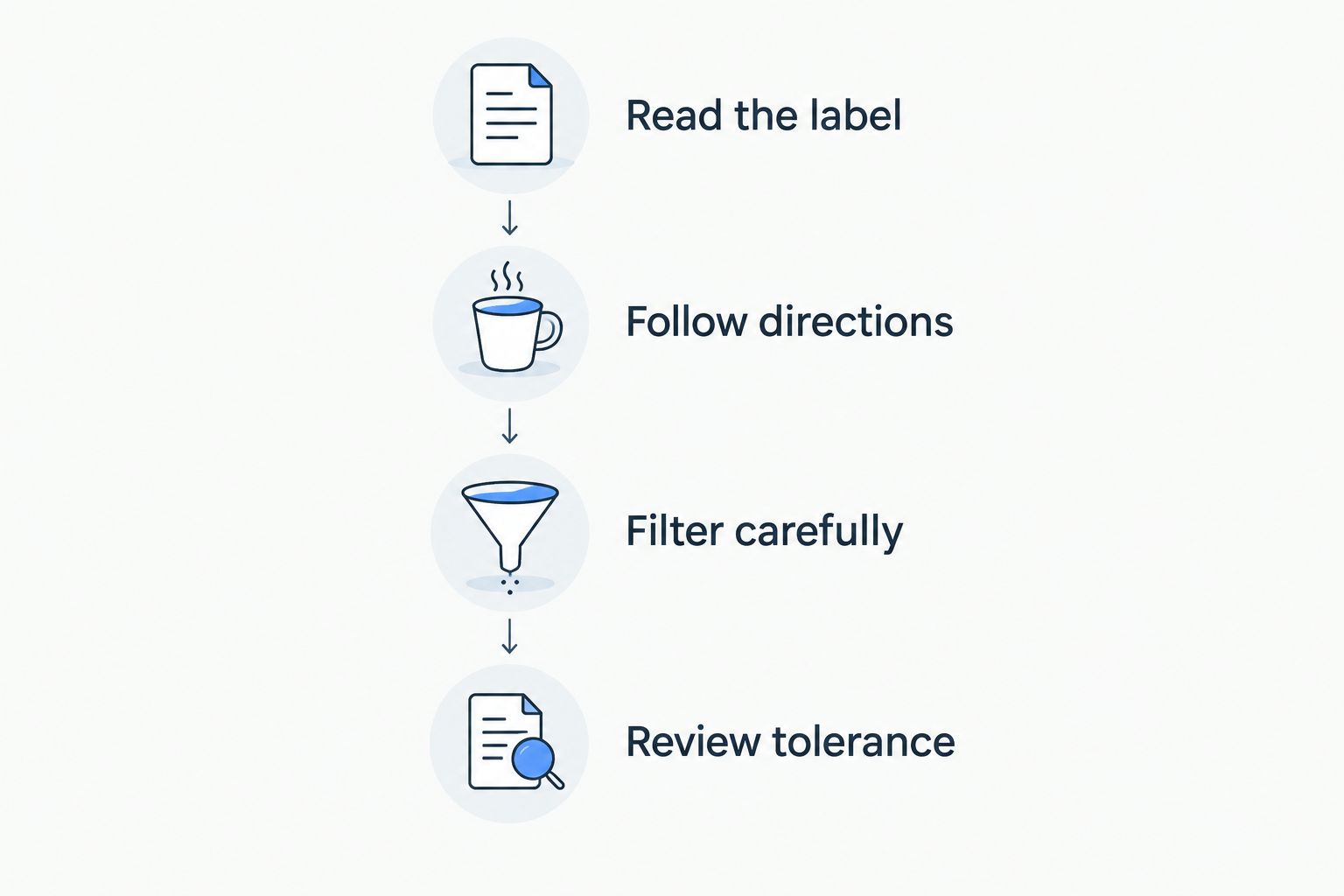
Check your cup before drinking, especially if a bag tears or you brew loose leaf. Visible sediment is a reason to filter again, not a sign that the preparation is more effective.
For a 2026 tea routine, keep the preparation consistent with its label. If you change brands, switch to a blend, or add a liquid extract, reassess the routine instead of carrying over the previous instructions.
Who should get advice before drinking it regularly?
If you are pregnant or breastfeeding
Do not start daily mullein leaf tea on the assumption that a plant-based drink is automatically suitable. Ask your prenatal clinician or pharmacist to review the exact preparation; insufficient safety information is not reassurance.
The EMA flower monograph does not recommend use during pregnancy or lactation because sufficient data are lacking. That flower-specific guidance does not establish a safe alternative schedule for leaf tea.
If you take medicines or other supplements
Show your pharmacist the full ingredient list and explain how often you intend to drink the tea. Include nonprescription medicines and other herbal products, because the whole routine matters.
Do not interpret an absent interaction warning as proof that combinations have been studied. Conversely, do not assume that every general supplement warning documents a confirmed mullein-specific interaction.
If the tea is for a child
Do not scale down an adult serving yourself. A child's age, symptoms, and medical history require pediatric advice, and an adult product label is not a pediatric dosing guide.
If a child has a persistent cough or breathing symptoms, arrange appropriate assessment instead of experimenting with a daily herbal routine. Tea should not delay that conversation.
What should make you stop drinking mullein tea?
Stop using the tea if you suspect it is causing irritation or another unwanted reaction. Keep the package so a clinician can identify the plant, preparation, and additional ingredients.
A scratchy sensation after drinking is not evidence of detoxification. Fine plant material can irritate, and a new symptom deserves attention rather than a stronger brew.
Seek emergency care for severe breathing difficulty, swelling of the lips or tongue, or other signs of a serious allergic reaction. These are general medical warning signs, not a claim that mullein commonly causes them.
Persistent or worsening cough, wheezing, fever, chest discomfort, or coughing blood also requires medical assessment. Do not use a tea routine to postpone care or replace prescribed treatment.
How many cups of mullein tea can I drink each day?
A universally established safe daily cup count for mullein leaf tea is not available. Follow your product's directions and ask a clinician whether regular use fits your circumstances; package size is not a dosing recommendation.
Do not borrow a cup count from flower guidance, another brand, or a liquid extract. Those instructions describe a different preparation or context.
Can I drink mullein tea every night?
Nightly use is still daily use, so changing the time of day does not resolve the uncertainty about long-term safety. Do not assume that a bedtime ritual establishes suitability or that mullein is a proven sleep aid.
Review the reason for the routine. If symptoms keep bringing you back to the tea, discuss those symptoms rather than simply renewing the habit.
Is mullein extract safer than mullein tea?
Mullein extract is not established as safer than mullein tea simply because it comes in a measured liquid format. Each preparation needs its own ingredient review, directions, and suitability assessment.
Do not combine formats to pursue a stronger effect without professional advice. A concentration label does not tell you how much brewed tea an extract replaces.
Choosing a mullein product without overreading the label
Herbalgoodnessco mullein leaf tea is best suited to shoppers seeking a brewed mullein preparation, not a proven long-term daily regimen. The practical benefit is the tea format; the limitation is that product format and organic positioning do not settle the safety question.
Before buying, look for a clearly identified plant part, complete ingredients, usable preparation directions, and warnings you can discuss with a pharmacist. Avoid treating respiratory wellness wording as evidence that a product treats a breathing condition.
For your 2026 product review, ask a specific question: does this label describe what I intend to use, and has my personal situation been considered? That question is more useful than asking whether all mullein products are generally good or bad.
FAQ
Is mullein tea every day safe for a healthy adult?
Long-term daily safety of mullein leaf tea is not established, even for a healthy adult. Follow the product label and review continuing use with a pharmacist or clinician.
Can I drink mullein tea while pregnant or breastfeeding?
Do not start regular mullein leaf tea during pregnancy or breastfeeding without professional advice. Available safety information does not establish a suitable daily regimen.
Does straining mullein tea make it safe?
Straining helps remove fine leaf hairs and loose particles, but it does not establish overall safety. Medicines, ingredients, personal circumstances, and duration of use still matter.
Can I take mullein tea with my prescription medicines?
Ask a pharmacist to review your medicines and the exact tea ingredients before combining them regularly. A missing interaction warning is not proof that the combination has been studied.
Is Herbalgoodnessco mullein tea proven safe for daily use?
This guide does not establish Herbalgoodnessco mullein tea as safe for indefinite daily use. Product format and organic labeling do not replace preparation-specific safety evidence or personal medical advice.
Does mullein tea clean out your lungs?
Mullein leaf tea is not established as a way to clean out your lungs. Do not use detox claims as a reason to increase consumption or delay assessment of breathing symptoms.
Can I give my child a smaller serving of mullein tea?
Do not calculate a child's serving by reducing an adult serving yourself. Ask a pediatric clinician to assess the child and the specific preparation.
One last thing
The most useful word on a mullein label is often leaf or flower—not strength. That distinction tells you whether the evidence you are reading even concerns the preparation in your cup.
Before making mullein tea an everyday habit, photograph the ingredients and directions and take them to your pharmacist. Ask about your intended frequency, other products, and reason for use; a specific conversation beats a general reassurance that herbs are natural.